From a cooling perspective, grey space and white space shouldn't be considered in isolation. They're two parts of the same thermal system. Heat doesn't recognise the boundary between them, and neither should the engineers responsible for removing it.
That's becoming increasingly important as AI, high-density computing and liquid cooling push thermal management to the top of every data centre operator's agenda.
The white space creates the heat. The grey space removes it.
The white space is where valuable work happens.
Servers process applications, GPUs train AI models and storage platforms handle ever-growing volumes of data. Every watt consumed eventually becomes heat.
The challenge isn't simply preventing servers from overheating. It's moving that heat away as efficiently as possible.
That's where the grey space comes in.
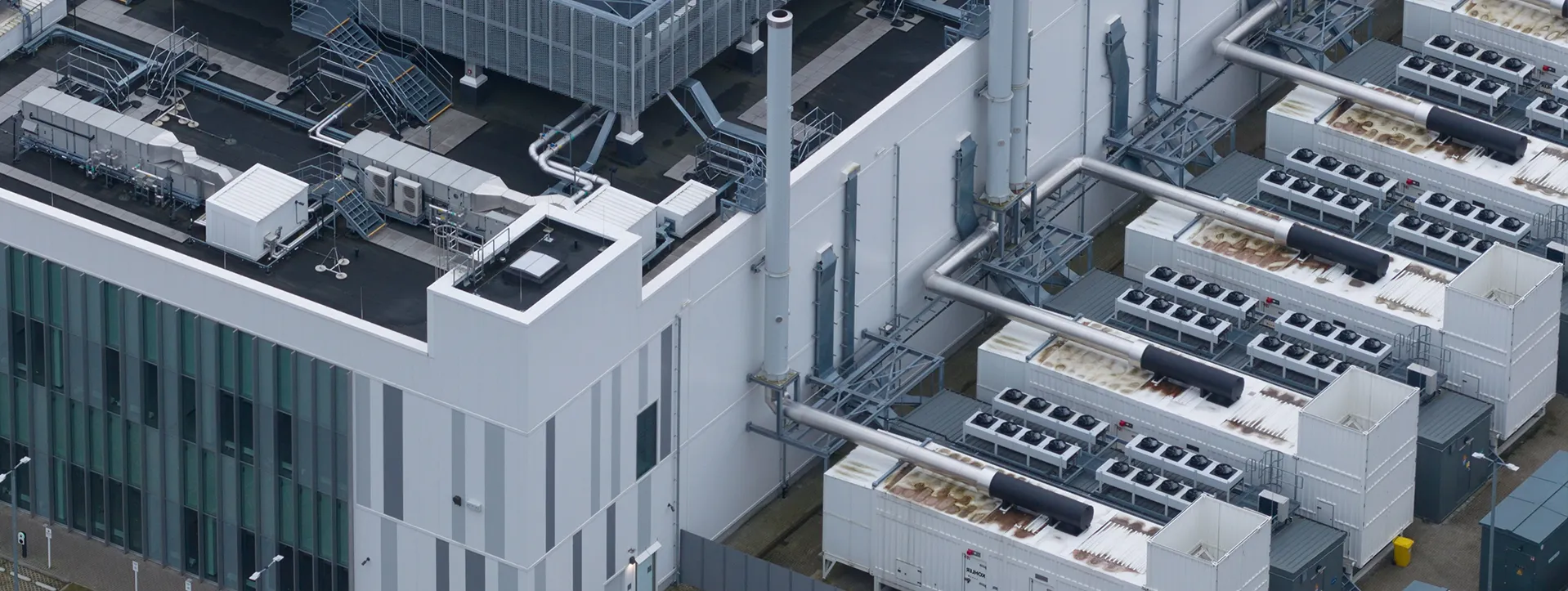
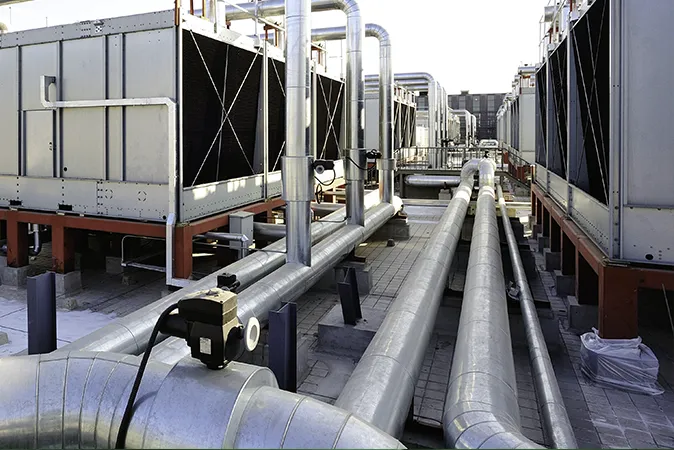
Behind the data hall sits an extensive cooling infrastructure - chillers, pumps, heat exchangers, cooling towers, distribution pipework, expansion vessels and increasingly sophisticated control systems - all working together to carry heat away from the IT load.
One simply cannot perform without the other.
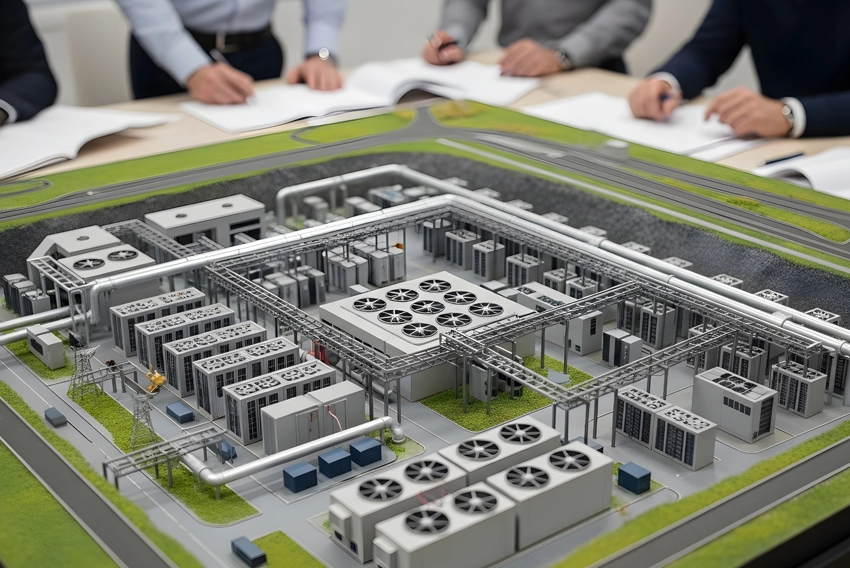
Rather than thinking of one area supporting the other, it's more accurate to think of both as forming one continuous cooling loop.
The cooling loop is only as strong as its weakest point
It's easy to focus investment on visible equipment.
New chillers.
New CDUs.
New pumps.
New liquid cooling technologies.
But thermal performance isn't determined by equipment alone.
A cooling system performs as a complete hydraulic and thermal network. Restrict flow in one area, introduce contamination into the fluid or allow heat exchangers to foul, and efficiency declines across the entire system.
The result might be higher energy consumption, reduced cooling capacity or unnecessary wear on critical assets.
In other words, you don't need a major equipment failure to lose performance. Small inefficiencies accumulate.
Why thermal fluid deserves more attention
One component is still routinely underestimated: the thermal fluid itself.
Every litre circulating through a cooling system is responsible for transporting heat from one part of the data centre to another.
Its condition directly affects:
- Heat transfer efficiency
- Pump performance
- Corrosion protection
- System cleanliness
- Component lifespan
- Overall cooling reliability
Yet thermal fluid is often viewed as something that's filled during commissioning and forgotten until there's a problem.
For operators running increasingly dense workloads, that's becoming a costly assumption.
Poor fluid quality doesn't just affect chemistry reports, it affects cooling performance.
The right thermal fluid for the right application
Although grey space and white space are part of the same cooling system, they have different thermal requirements. DC Cooling Solutions offers specialist fluids designed to optimise performance at every stage of the cooling journey.
Grey Space – Primary & Facility Cooling Loops
Castrol ON Primary Cooling Fluid DTX is engineered for use within primary cooling infrastructure, including chilled water systems, heat rejection plant, CDUs and facility cooling loops. Its advanced formulation helps maximise heat transfer efficiency while protecting critical assets against corrosion, scale and biological fouling, supporting lower maintenance requirements and improved long-term system performance.
White Space – Direct-to-Chip & Immersion Cooling
For high-density IT environments, Castrol ON DLC PG25 Direct-to-Chip Coolant and Castrol ON DC15 & DC20 Immersion Cooling Fluids are specifically developed for liquid cooling applications within the white space. Designed to deliver excellent thermal performance and material compatibility, they support efficient heat removal from next-generation processors while helping operators maximise reliability, energy efficiency and equipment longevity.
Monitoring is just as important as installation
A perfectly designed cooling system won't remain perfectly efficient on its own.
Thermal fluids age.
Additives become depleted.
Contamination enters systems during maintenance.
Small changes in water quality can gradually reduce system performance long before alarms begin to sound.
That's why the most resilient data centres don't simply install good cooling infrastructure.
They actively manage it.
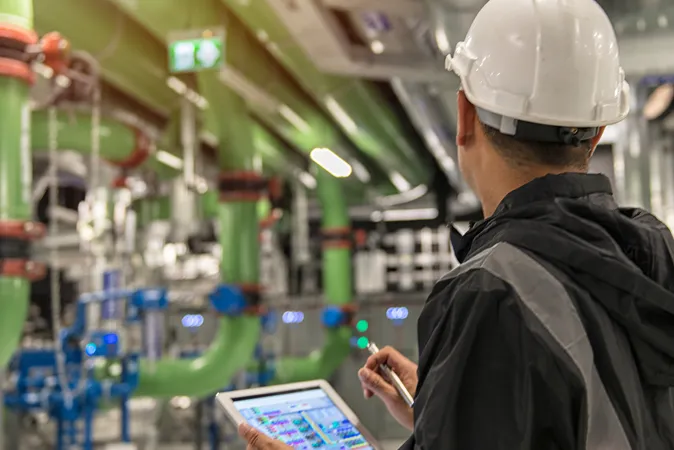
Regular fluid analysis, condition monitoring and preventative maintenance allow operators to identify issues before they become operational problems, protecting both efficiency and uptime.
Cooling should be managed as one system
One of the biggest misconceptions in data centre design is treating the plant room and the data hall as separate engineering disciplines.
In reality, they're inseparable.
A poorly optimised cooling plant affects rack temperatures.
A contaminated fluid circuit reduces heat rejection.
An incorrectly balanced hydraulic system increases pumping costs throughout the network.
Every decision made in the grey space eventually influences what happens in the white space.
That's why cooling strategies need to consider the complete thermal journey, from heat generation inside the rack to heat rejection outside the building.
Where DC Cooling Solutions fit in
At DC Cooling Solutions, we don't see cooling as a collection of individual products.
We see it as an interconnected thermal system.
Our work spans every stage of that system, including:
Whether supporting traditional chilled water infrastructure or next-generation liquid cooling deployments, our objective is always the same: helping customers maximise thermal performance across the entire cooling loop.
Because the distinction between grey space and white space may matter on a floor plan. For cooling performance, there is only one system.
See the whole cooling picture
Grey space and white space may serve different purposes, but successful cooling depends on treating them as one integrated thermal system.
At DC Cooling Solutions, we help data centre owners, operators and contractors optimise every stage of that system through advanced thermal fluids, specialist engineering services, fluid condition monitoring and lifecycle support.
Whether you're designing new infrastructure, upgrading existing cooling systems or looking to improve efficiency, resilience and long-term performance, our specialists can help you get more from your cooling investment.
Get in touch with the DCCS team to discover how a joined-up approach to thermal management can improve the efficiency, reliability and lifespan of your entire cooling system.