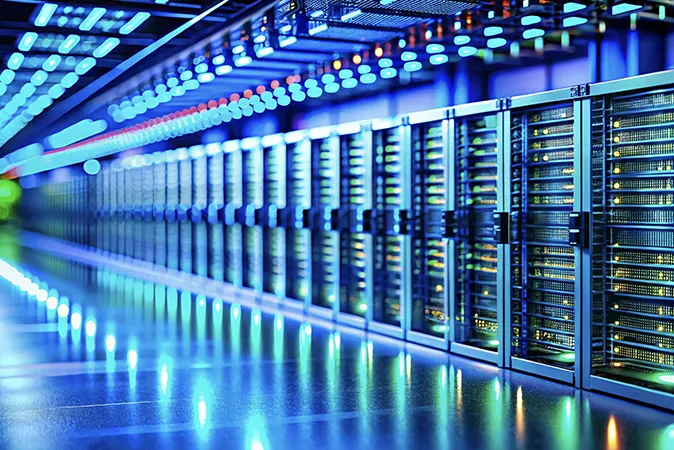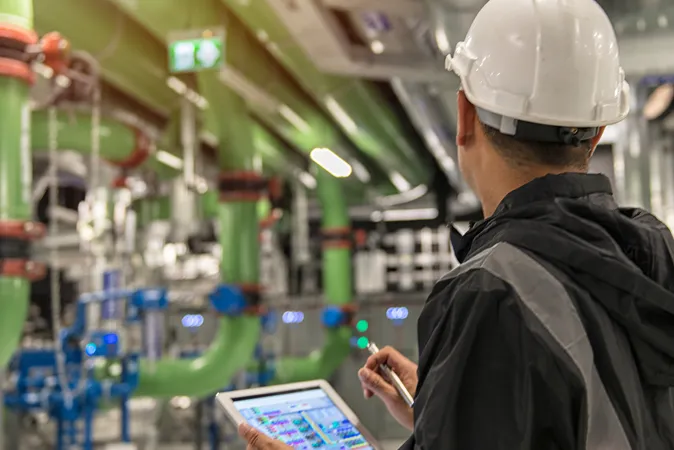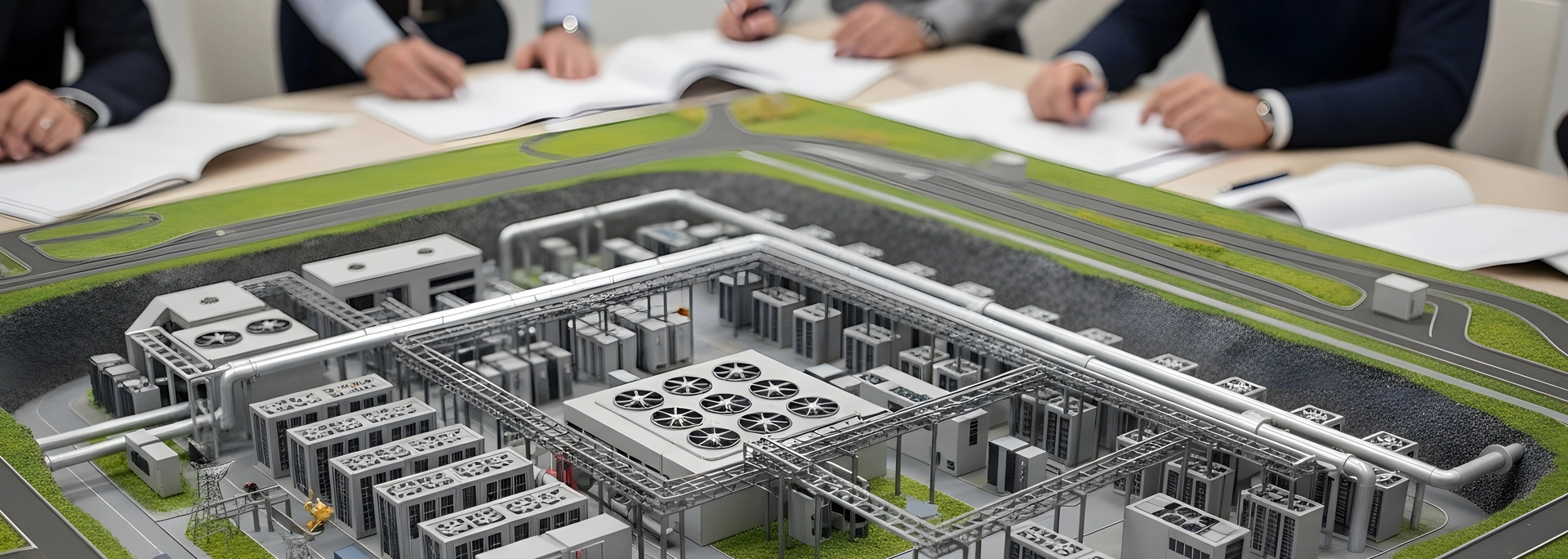
Cooling is no longer simply a facilities consideration. It directly impacts PUE, sustainability targets, operational reliability, maintenance requirements and future scalability. Decisions made during the planning and design stages can determine whether a facility performs efficiently or requires costly modifications within the first year of operation.
Data Centre Cooling Solutions, in partnership with Castrol ON, consult with investors, data centre design teams, consultants, contractors and procurement teams, providing a comprehensive strategy to fluid and facilities management solutions and compliant critical infrastructure and environments. Our highly trained team of experts specialise in thermal fluid solutions, hydronic engineering and cooling systems optimisation.
Building a modern data centre is an in-depth process involving local authorities, utility companies, engineering experts, logistics, procurement, risk management and operational continuity.
If cooling requirements are introduced late, project teams can often face challenges with:
- Increased construction costs
- Design compromises
- Reduced energy efficiency
- Limited scalability
- Difficult maintenance access
- Delays to commissioning
- Higher operational costs
The importance of cooling planning during the feasibility stage
Every successful data centre project begins with a feasibility and planning phase. At this stage, developers and consultants assess:
- Viable water supply options
- Available utility power and grid capacity
- Site constraints and planning considerations
- Facility capacity requirements
- Redundancy and resilience targets
- Sustainability objectives
- Future expansion requirements
The chosen cooling approach influences building layout, mechanical plant requirements, pipework routes, plantroom space, power demand, water consumption and future expansion opportunities.
Including specialist cooling expertise in feasibility discussions allows project teams to identify risks early, compare technologies, review all viable options and develop realistic budgets before design and construction begins.
Design Development: Where cooling becomes critical
Following feasibility, projects move into detailed design and technical coordination.
At this stage, architects, M&E consultants, contractors and specialist suppliers must work together to integrate:
- Electrical infrastructure
- Mechanical systems
- Potable or non-potable water supplies
- HVAC design
- Fire and life safety systems
- Security and access control
- Network infrastructure
- Operational maintenance requirements
Thermal management and cooling infrastructure is one of the most critical components of a data centre, potentially representing up to 40% of its operational functionality. This includes the building’s HVAC systems as well as the specialised cooling technologies required to support high-density and AI-focused computing racks.
Liquid Cooling in modern Data Centres
With the ongoing rapid increase of advanced liquid cooling, due to data centres requirements to meet sustainability targets - lowering overall water consumption - it’s changing the way designers, procurement teams and contractors plan and build modern day data centre facilities.
Liquid cooling provides several advantages compared with traditional air-cooling systems:
Greater heat removal capacity
Liquids transfer high heat significantly more effectively than air, allowing cooling systems to manage the thermal demands of modern high-density compute environments.
Support for High-Density Racks
Liquid cooling enables rack densities that would be extremely difficult to achieve with air cooling alone.
Improved energy efficiency
By reducing reliance on fans and compressors, liquid cooling can significantly reduce energy consumption.
Enhanced reliability
Maintaining more stable operating temperatures helps minimise thermal stress on critical equipment and supports long-term reliability.
Sustainability benefits
Liquid cooling supports lower energy usage, improved PUE performance and opportunities for heat recovery and reuse.
As sustainability targets become increasingly important across the UK data centre sector, these advantages are becoming harder to ignore.
Why coolant selection matters
As more projects move towards liquid cooling, selecting the correct heat transfer fluid becomes increasingly important.
DCCS & Castrol ON formulate, distribute and support advanced thermal fluids for use in closed loop cooling systems. Our Coolflow DTX product provides increased thermodynamic and hydrodynamic performance benefits of Ethylene Glycol (EG) based cooling fluids, whilst providing low-toxicity credentials of PG based cooling fluids, offering significant efficiency and environmental advantages.
Benefits include:
- Inbuilt resistance to oxidation, thermal degradation and biological contamination.
- Optimised thermodynamic and hydrodynamic performance for improved PUE characteristics.
- Enhanced CUE with minimised environmental footprint, low toxicity and biodegradability.
- Compatible with all metals, seals and materials commonly used in data centre cooling systems.
- Maximum potential for reuse or upcycling at time of data centre decommissioning.
Coolflow DTX will help you achieve a direct-liquid cooled data centre and prevent corrosion and biological fouling ensuring your system runs efficiently with a significant reduction in potable water demand.
Why engage DCCS at the start of your project?
The greatest opportunities to improve efficiency, reduce risk and future-proof a data centre occur before construction begins.
DCCS supports developers, consultants, contractors and procurement teams throughout the project lifecycle, providing specialist guidance on:
- Cooling strategy development
- Liquid cooling implementation
- Heat transfer fluid selection
- Coolflow DTX specification and additional performance additives
- Sustainability improvements
- Risk reduction
- Commissioning support
- Ongoing technical consultancy
- Fluid Monitoring Programs
By engaging cooling experts during the feasibility and design stages, project teams can avoid costly redesigns, improve operational performance and ensure facilities are prepared for the future demands of AI and high-density computing.
If you are developing a new data centre, expanding an existing facility or evaluating liquid cooling technologies, contact the DCCS team today and discover how early-stage cooling expertise will deliver a more efficient, sustainable and future-ready data centre.