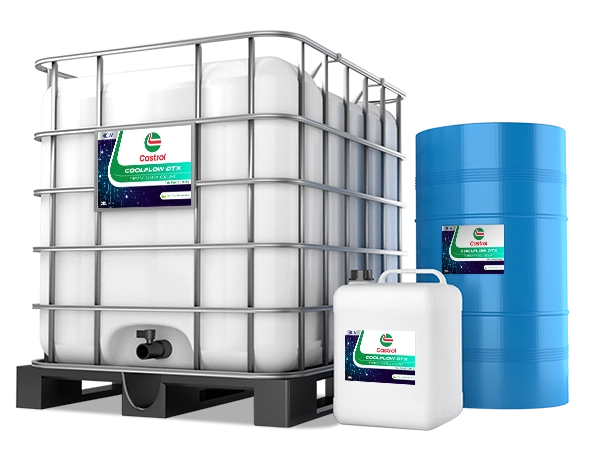
Glycol in Data Center Primary Cooling Systems
 What is glycol used for in data center cooling systems?
Glycol is used in data center primary cooling systems to lower the freezing point of water, stabilize thermal performance, and protect closed-loop chilled water circuits from corrosion. It enables reliable operation in low-ambient conditions and supports consistent heat transfer across varying loads.
Why is glycol important in primary cooling loops?
In primary cooling loops, glycol directly affects heat transfer efficiency, pumping energy, and system reliability. Poor glycol selection or incorrect concentration can increase viscosity, reduce chiller efficiency, and raise operational energy costs in data centers.
What is the difference between propylene glycol and ethylene glycol in data centers?
Ethylene glycol offers superior heat transfer and lower viscosity but is toxic and poses safety and environmental risks. Propylene glycol is significantly less toxic and safer for critical facilities but traditionally delivers lower thermodynamic performance.
Is propylene glycol suitable for AI and high-density data centers?
Standard propylene glycol can be used in AI and high-density data centers, but its higher viscosity may impact pumping energy and heat transfer efficiency. Advanced formulations such as Castrol ON Primary Loop DTX are especially engineered to meet modern AI cooling performance demands.
What is Castrol On Primary Loop DTX?
Castrol On Primary Loop DTX is an advanced glycol solution designed for closed-loop data center primary cooling systems. It combines the low toxicity benefits of propylene glycol with thermodynamic and hydrodynamic performance characteristics similar to ethylene glycol.
How does Castrol On Primary Loop DTX improve cooling efficiency?
Castrol On Primary Loop DTX supports efficient heat transfer and predictable flow behavior while minimizing pumping energy penalties. This improves overall cooling system efficiency without compromising safety or environmental compliance.
Does glycol affect data center energy efficiency and PUE?
Yes. Glycol selection directly influences pumping energy, heat exchanger effectiveness, and chiller performance. Optimized glycol formulations can help maintain lower PUE and support long-term energy efficiency in data centers.
How often should glycol in a data center cooling system be monitored?
Glycol in closed-loop data center cooling systems should be regularly monitored for concentration, inhibitor health, and contamination to maintain performance, corrosion protection, and operational reliability.
DC Cooling Solutions recommend quarterly sampling, in accordance with BSRIA and British Standard BS8552 guidelines. Their in-house laboratory carries out analytical fluid testing of hydronic system fluids to identify water contaminants, bacterial presence, water treatment levels or the makeup of elements. Find out more.
Summary
Glycol plays a critical role in data center primary cooling systems by protecting closed-loop chilled water circuits from freezing, corrosion, and thermal instability. Traditional choices between ethylene glycol (high performance, toxic) and propylene glycol (low toxicity, lower efficiency) force a trade-off between safety and efficiency. Advanced solutions such as Castrol On Primary Loop DTX resolve this compromise by combining the low toxicity of propylene glycol with thermodynamic and hydrodynamic performance comparable to ethylene glycol. This makes DTX well suited to AI and high-density data centers where cooling efficiency, resilience, and risk governance must align.